Exercise 3.1 – Freeze
Brief – Try to isolate a frozen moment of time in a moving subject. Add a selection of shots, together with relevant shooting data and a description of process.
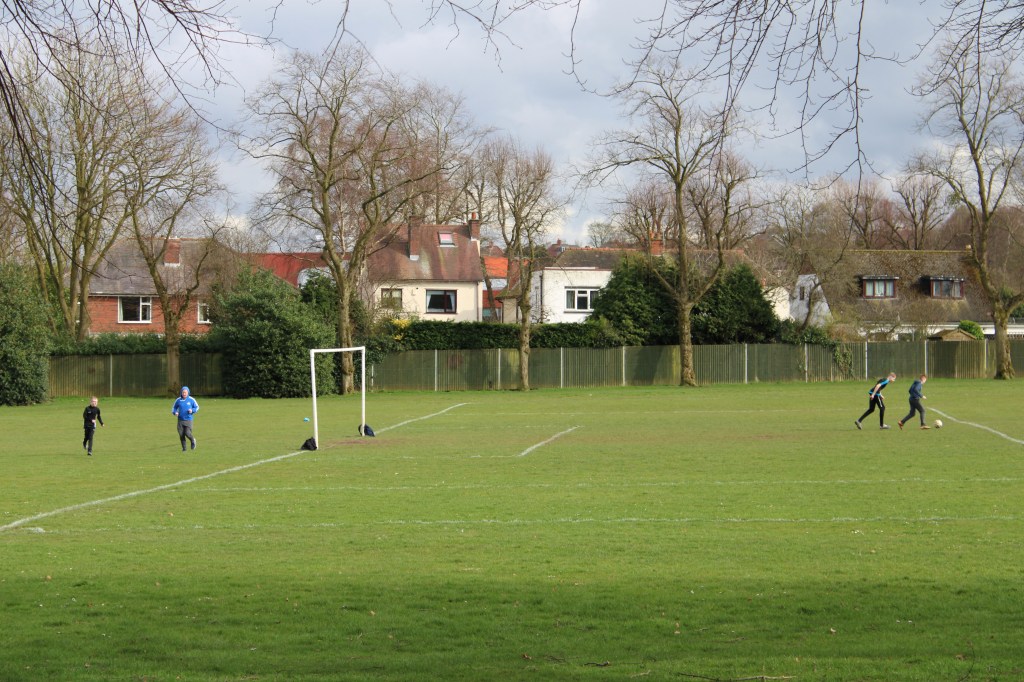
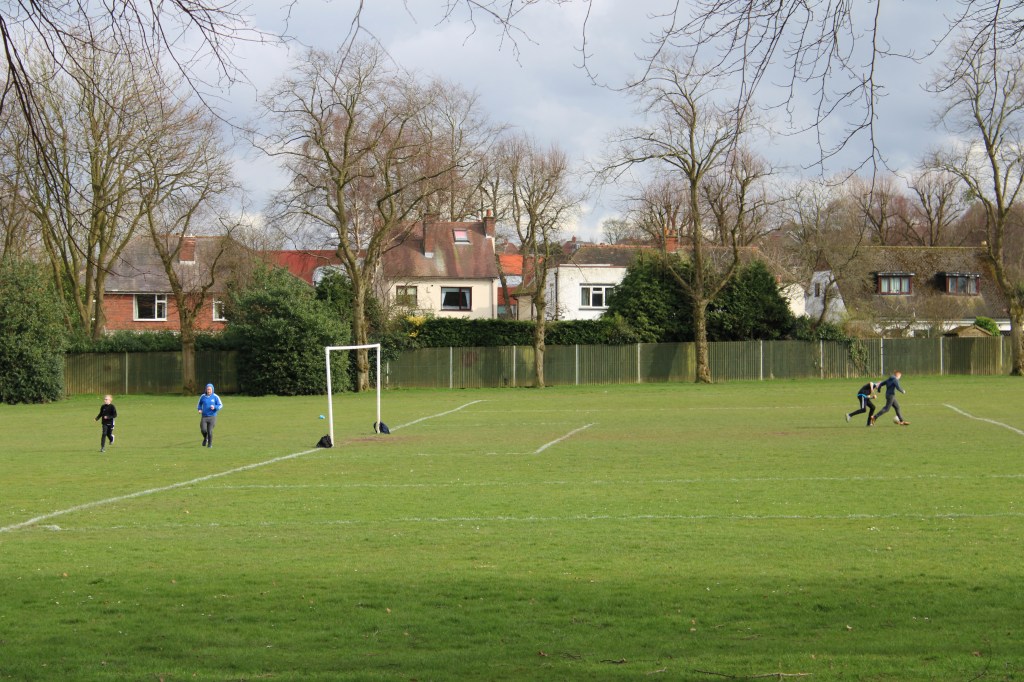
The moment I decided to photograph was a football game in my local park. The composition of these shots had to be done fairly quickly as I wanted to capture the game before it ended and whilst there was enough motion to capture. I kept a shutter speed of 1/120 as I wanted to capture the motion but not end up with motion blur. I was then able to see the movement of running and kicking without it being blurry. Luckily I had really nice lighting without adjusting the ISO too much, it was a bright sunny day and the sun was beaming down right onto the pitch. As well as this there was a lot of negative spaced used in these images, but I think this helps draw the eyes to the motion in the pictures.
Final Shots
I took a selection of shots but these were my final two. These shots had the most motion and the other images didn’t capture as much of the game.
Exercise 3.2 – Trace
Using slow shutter speeds, the multiple exposure function, or another technique, try to record the trace of movement within the frame. Add a selection of shots together with relevant shooting data and a description of process.
Whilst my sister was on the swings in the park, I saw an opportunity to get this exercise done. When setting up these shots I chose to use slow shutter speeds, I thought this would be easiest to catch all of the motion. For my shots I decided to use shutter speeds of 1/80 as I thought this would be best to capture the motion without too much of a blur.
Final Shots
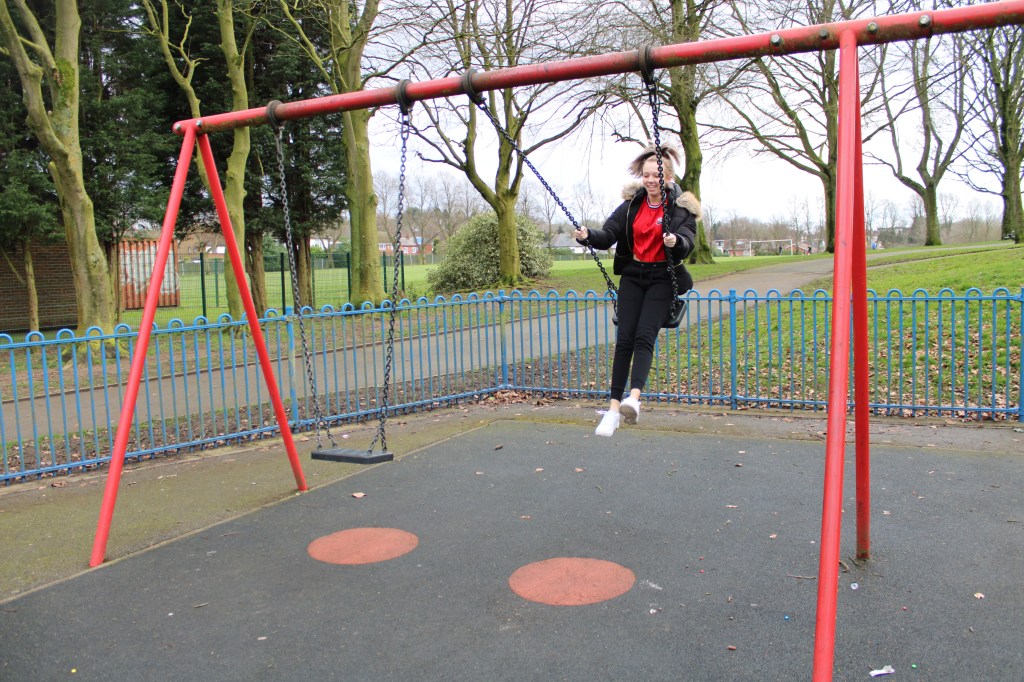
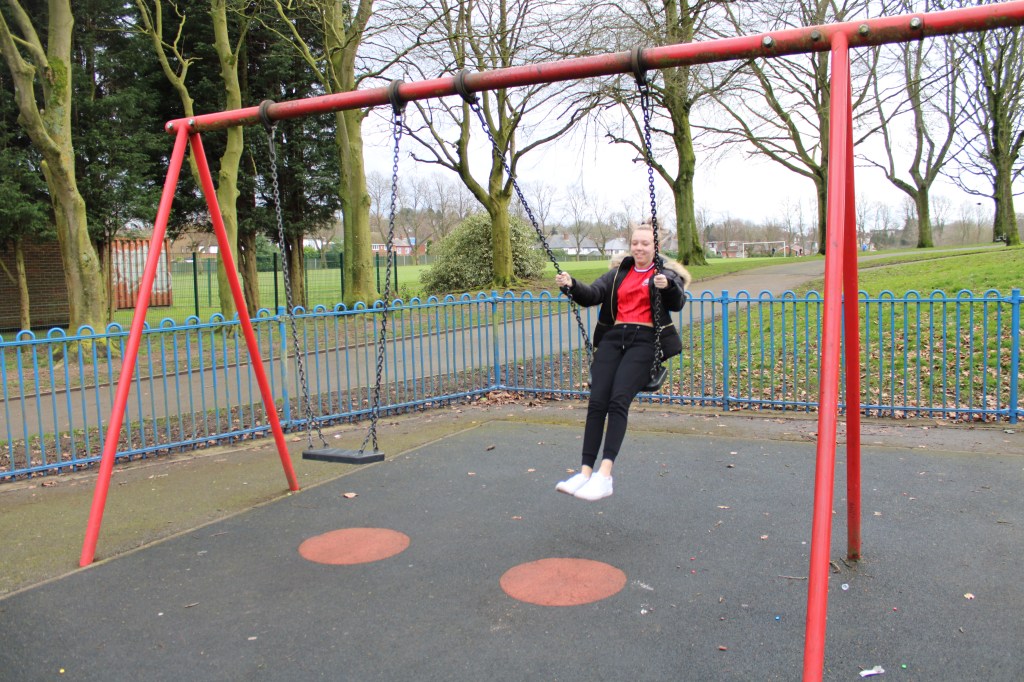
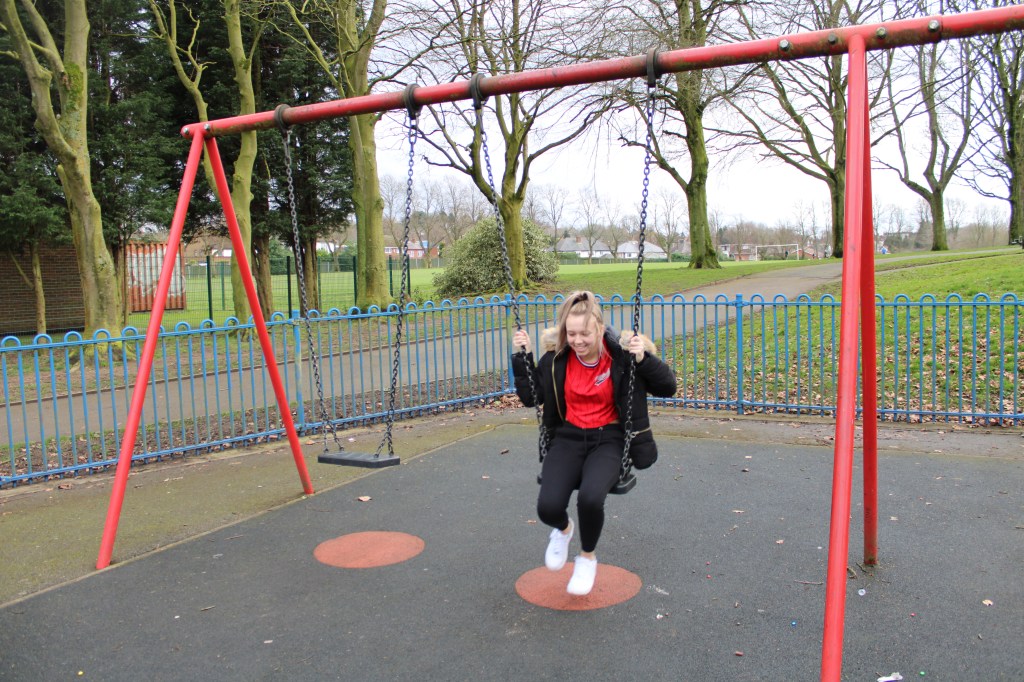
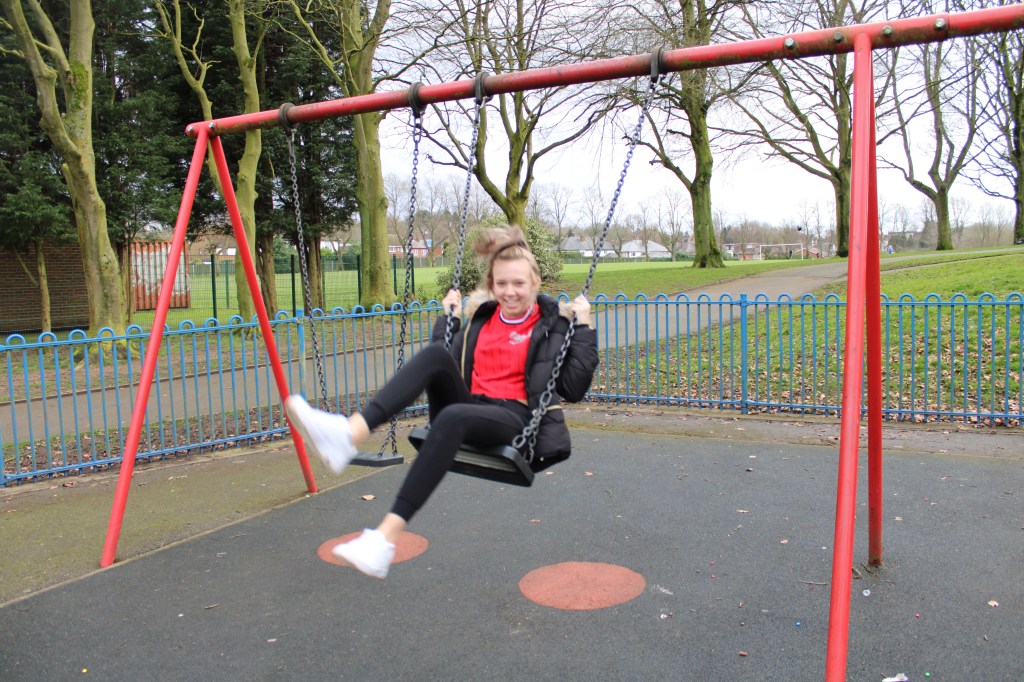
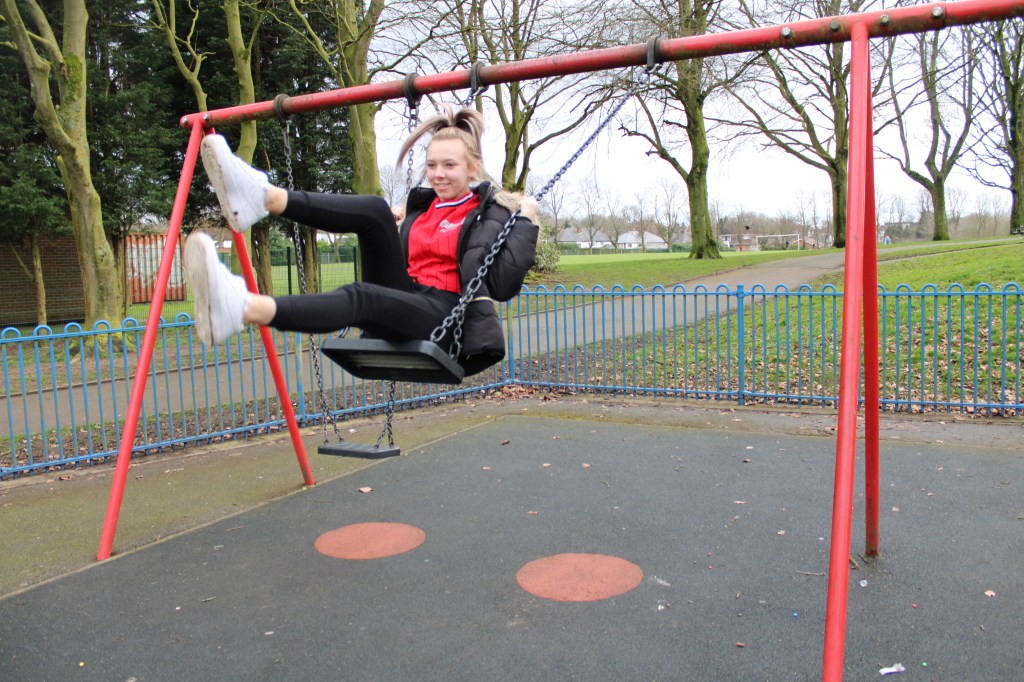
I think this collection of images came out really well. When looking through the pictures it’s as if it tells a story, as you flick through the images, you’re moving through the scene. The slight blur in certain parts of each picture show there’s more motion in that area, like the blur of her shoes in the last two images. I think I stuck to the brief well and really portrayed the idea of using shutter speeds to capture a sequence of motion.
Exercise 3.3 – What matters is to look
Find a good viewpoint, perhaps fairly high up,, start by looking at the things closest to you in the foreground. Then pay attention to details in the middle distance and then the things towards the horizon. Try to see the whole view together and release the shutter.
This task I found slightly harder than the previous exercises in Part 2. Purely because it seemed like too much of a simple concept to just snap a shot of a landscape. But once I’d thought about it and looked at the picture I noticed the different levels.
Firstly in the foreground you see the more patchy grass, which makes the first level. Then when you scan your eyes further back in the picture you reach the football field, the grass is healthier than in the foreground. Because of how big the football field is it makes it seem like the background is even further away and creates a sense of depth. Finally scanning all the way to the background, you reach the part of the picture with a bit more going on, a bit of civilisation; houses and other buildings etc.
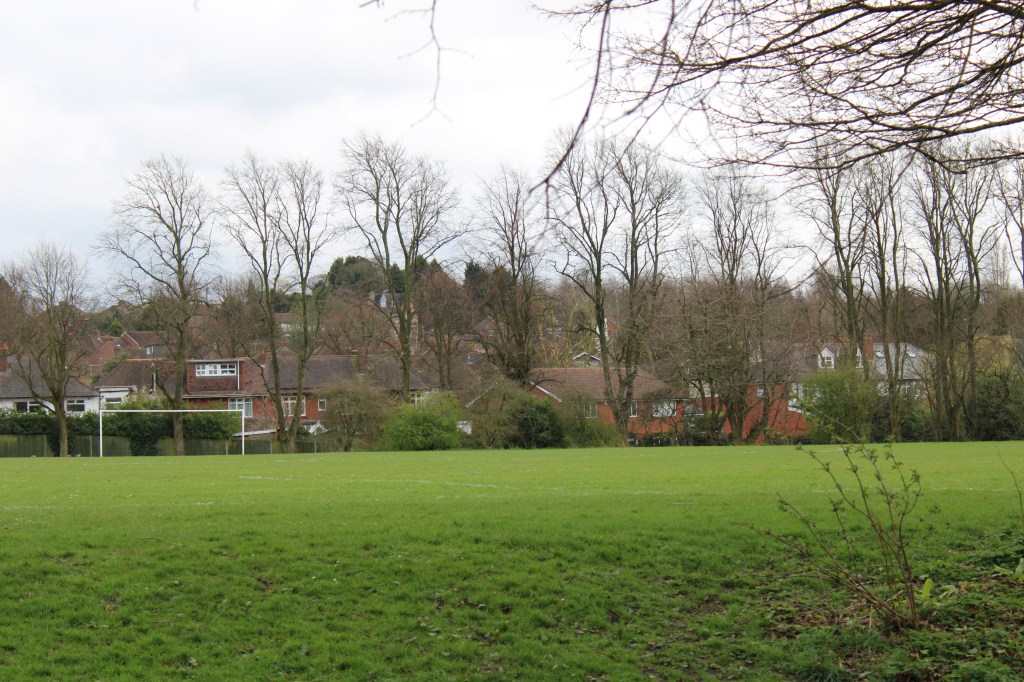
Whilst there’s no people in the whole shot you can clearly see the contrast from the negative space in the foreground the busyness of the background, with a lot to focus on. You can see all the trees have lost their leaves because of the time of year, and that the weather is dull and gloomy, another giveaway of the time of year.
 OCA Photography Expressing your Vision