Brief – Create a set of between six and ten finished images on the theme of the decisive moment. There should be a linking theme, whether it’s a location, event or particular period of time. Include a written introduction outlining the initial ideas and development.
Initial thoughts
When initially reading the brief for this assignment I was quite unsure which route to take with it, I thought the easiest thing would be to begin with some research and see where it took me. I read through the exemplars given with the brief, as well as the quote left by Tutor Clive White:
“As ever it’s not about showing us decisive moments it’s about the student showing us they understand the concept and can employ it creatively as a strategy in processing their own work”
Research
Henri Cartier-Bresson – The decisive moment
I started by looking further into the work of Henri-Cartier Bresson. When Bresson picked up a tiny Leica 35mm film camera in 1931, he began a visual journey that would revolutionize 20th-century photography. Cartier-Bresson’s concept of the “decisive moment” – a split second that reveals the larger truth of a situation – shaped modern street photography and set the stage for hundreds of photojournalists to bring the world into living rooms through magazines such as Life and Look. Though he often focused on the human condition in his photographs, Cartier-Bresson would often look at his contact sheets or prints upside down to judge the images separate from any social content. His signature shooting technique was to find a visually arresting setting for a photograph and then patiently wait for that decisive moment to unfurl. In his obituary in The New York Times in 2004, the critic Michael Kimmelman wrote –
“Photographers and others who saw him work talked about his swift and nimble ability to snap a picture undetected”.
The director Louis Malle remembered that, Mr Cartier-Bresson took photographs at the rate of only about four an hour.
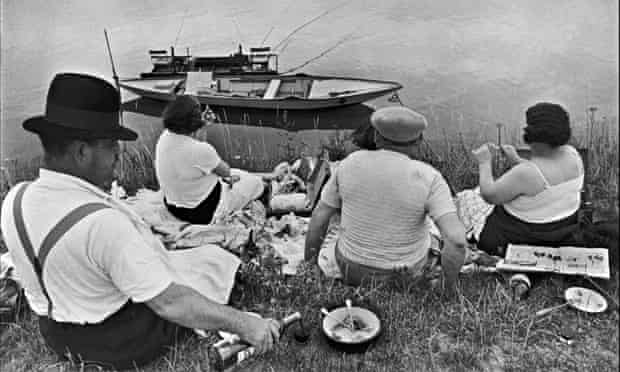
The Decisive Moment was Cartier-Bresson’s first self-conceived and edited book. Bresson always emphasised the importance of composition, and liked to “instinctively fix a geometric pattern” into which a chosen subject fitted. The Curator Clément Chéroux spoke on this concept in his essay for the new edition of the book. He claimed the pre-Magnum Cartier-Bresson was obsessed with form and creating his personal style; whereas in contrast, post magnum – he was driven to make images that mattered more in terms of their social and political rather than aesthetic import.
What Cartier-Bresson understood by the decisive moment is best explained by the famous quote from his lengthy introduction to the book:
“Photography is the simultaneous recognition, in a fraction of a second, of the significance of an event as well as of a precise organisation of forms which give that event its proper expression.”
Nick Waplington – The Indecisive Momento
I then thought it would be a good idea to take a look at an opposite point of view, I decided to look at Nick Waplington with ‘The indecisive momento’. Waplington is a British artist and photographer based in New York City. One of his most important bodies of work was ‘The indecisive momento’, a book documenting an eight week journey through Central and South America and the Pacific.
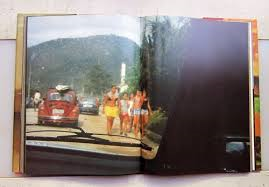
His aim was to reflect the aspirations of young people whose dreams have been stylized by the mass media. Waplington travelled from Sao Paulo, Montevideo and Buenos Aires to Cuba, Easter Island and finally Australia. His work is famously diverse and appears ot have no signature style or subject matter. He clams to be “interested in everything”. As well as this Waplington doesn’t actually describe himself as a photographer but as an artist.
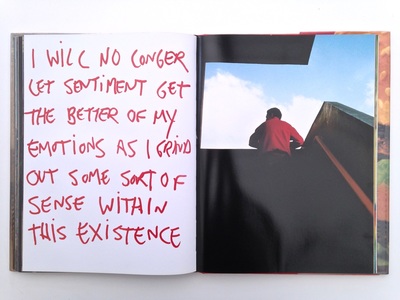
Waplington approaches his work quite differently to Bresson which I found rather interesting to think about. Whilst Bresson focuses a lot on compositions and framing, and really structuring a picture, Waplington claims:
“I work with ideas, but I believe they will evolve through the act of taking photographs”.
References
The Guardian, Sean O’Hagan, Tues 23 Dec 2014 -https://www.theguardian.com/artanddesign/2014/dec/23/henri-cartier-bresson-the-decisive-moment-reissued-photography
The (In)decisive Moment – https://www.photopedagogy.com/the-indecisive-moment.html
My Idea
Originally when I was thinking about what do to for this assignment I wanted to link my photographs through location; going somewhere with a nice view and getting some beautiful shots. However because of current circumstances this is no longer possible, as we find ourselves in lockdown. Although it wasn’t my chosen situation, I then had to go back to the drawing board and try to create something whilst being stuck at home. I came upon the idea of creating a collection of images linking through an event/particular period of time (as stated in the brief). Whilst it may not be a particularly enjoyable period of time, it’s definitely a memorable period of time, so I thought I could use this to my advantage with a ‘Quarantine Collection’.
My Photographs
My first shot in this collection is from a photoshoot I decided to do outside with my sister. I’d seen this trend floating around the internet a few times before and had wanted to try it out myself. It involves taking a mirror outside and photographing someone’s reflection. It took a lot of changing of the composition to get the light right. I took quite a lot of shots and wish I could add all of them but these two were my personal favourites.
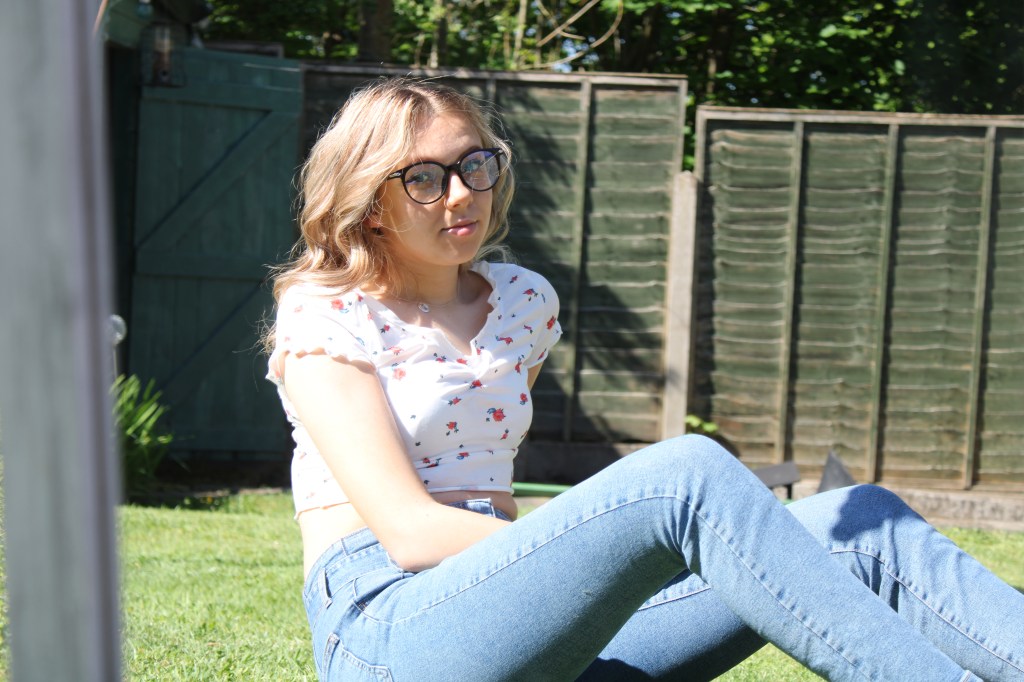
Originally I had to ISO a lot higher, some shots were taken at 400 and some at 800; but I soon realised this was way too high as having the light form the sun on her face as well as the high ISO made her face come out quite white. We already experimented with the background, the first shot was just the fence (a plainer background), and added more in the back of the second chosen shot. I found the first shot where the background was plainer to be more effective as it draws the eyes straight to the subject and makes her stand out more.
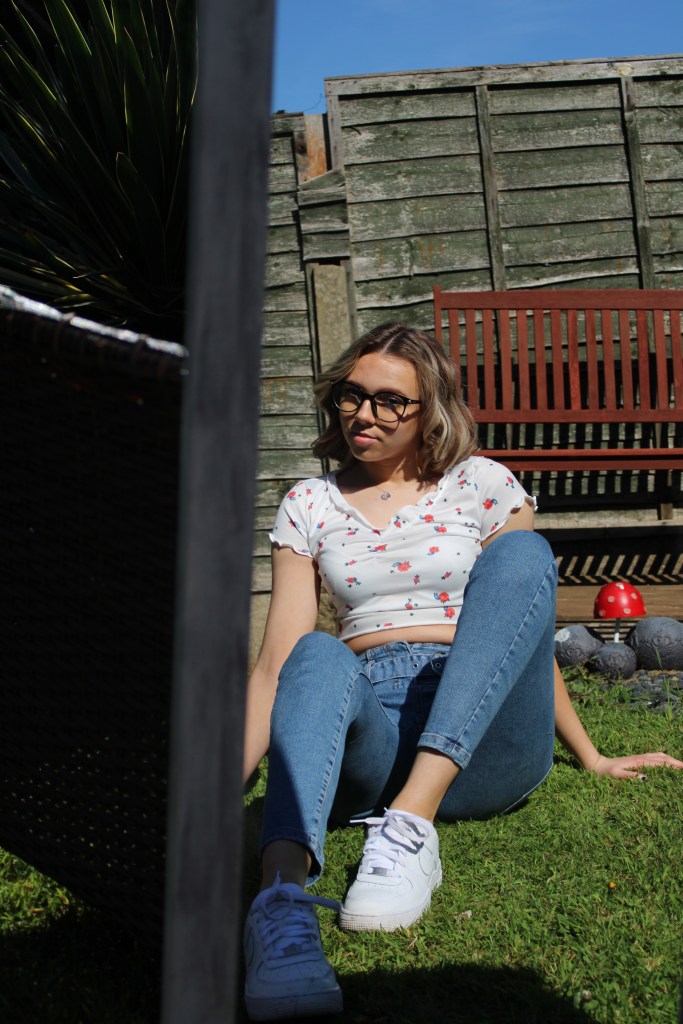
Another day of quarantine bought another photoshoot, whilst this one was to get a shot for another exercise, we carried on experimenting with different angles and viewpoints, and got a lot of good shots from it. This particular angle really caught my eye, I was just playing around with angles and shooting from below the subject bought some really nice shots and created the effect of the subject being higher up.
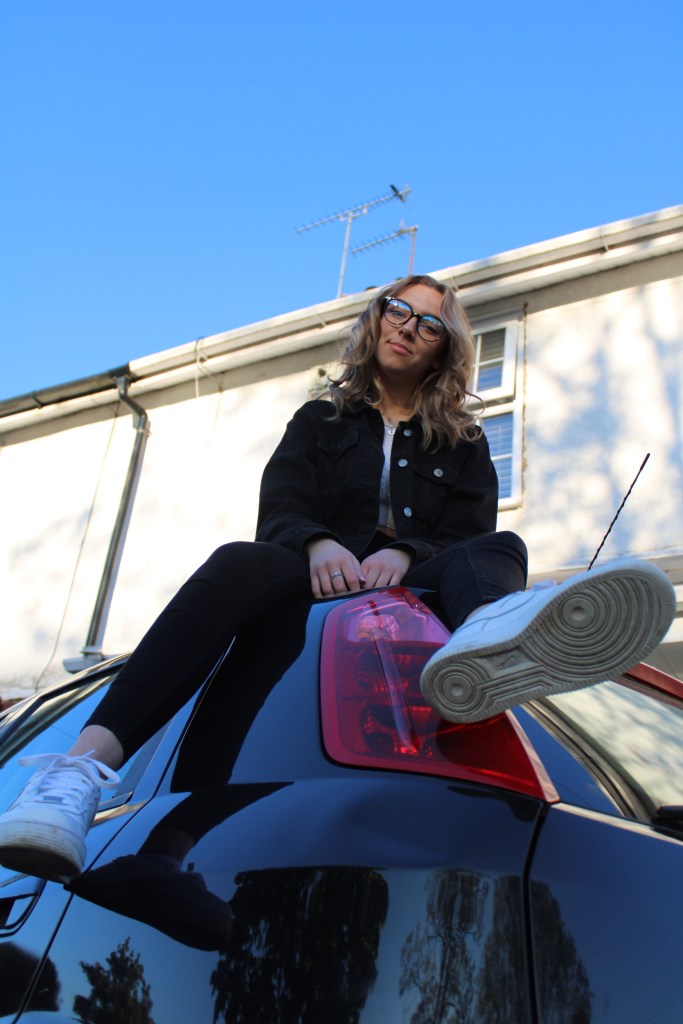
This shot came from an important part of lockdown – the weekly NHS clap. We went outside just as we do every Thursday at 8pm and clapped to thank the NHS for their services on the frontline. I found this quite a meaningful thing to capture while being in lockdown as it’s something nearly everyone is participating in, and it’s something we’re all doing as a community. We step outside and see all our neighbours out too, clapping at their door in their pyjamas. I decided to run in and get my camera and camera my Mom amidst her clapping, and thought it was a really touching shot.
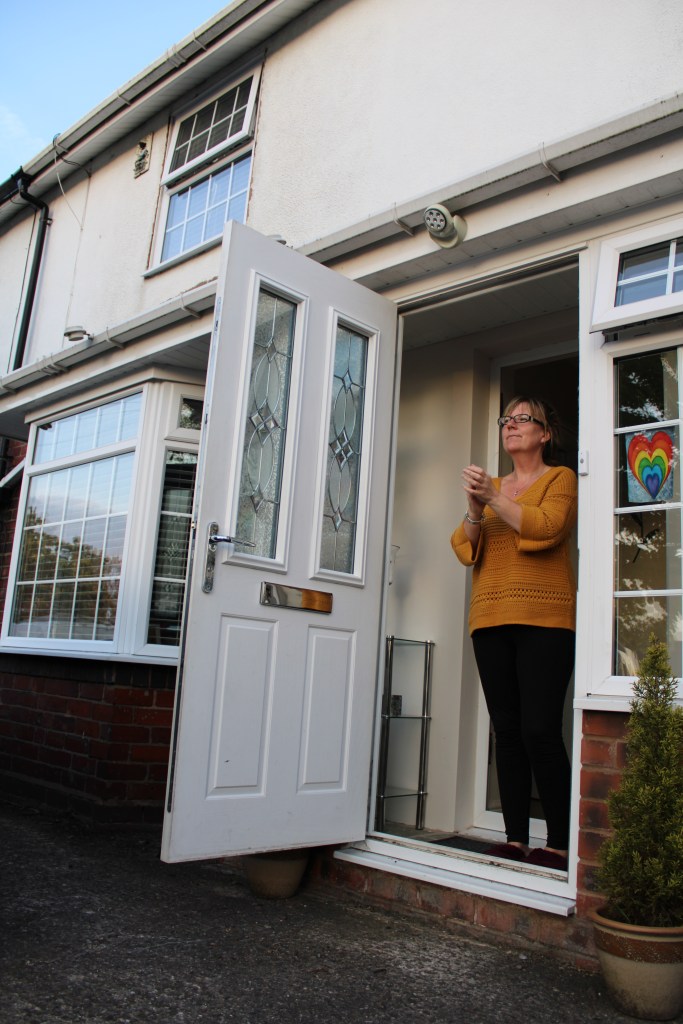
A task I decided to tackle during lockdown was my bedroom, getting new décor and just making it look exactly as I wanted it. I bought some prints to go on the wall and so I thought this a perfect opportunity for another shot. I thought this shot came out quite well, with the focal point giving the effect of lines. Whilst the shot has no colour filter, I like the black and white effect it came out with, as the prints and wall were white. It gives a more dynamic effect.
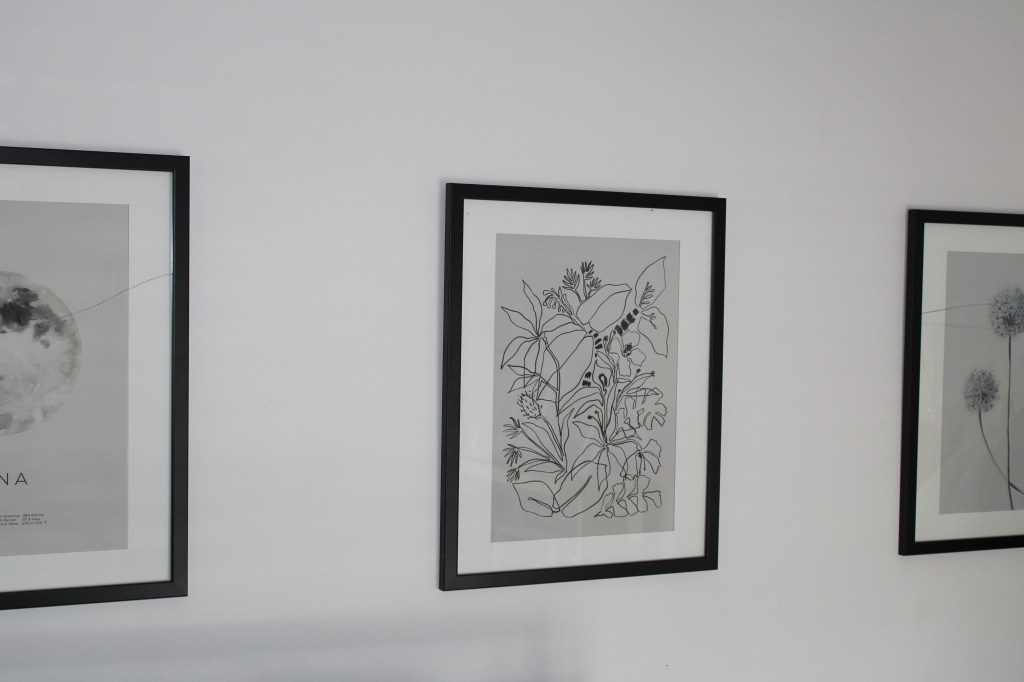
Throughout lockdown we’ve had a lot of good weather, so I am using this as my final shot. We’ve spent a lot of time in the garden, enjoying the sunshine and getting some fresh air. I find that sunlight creates some really beautiful pictures, often better than using artificial light.
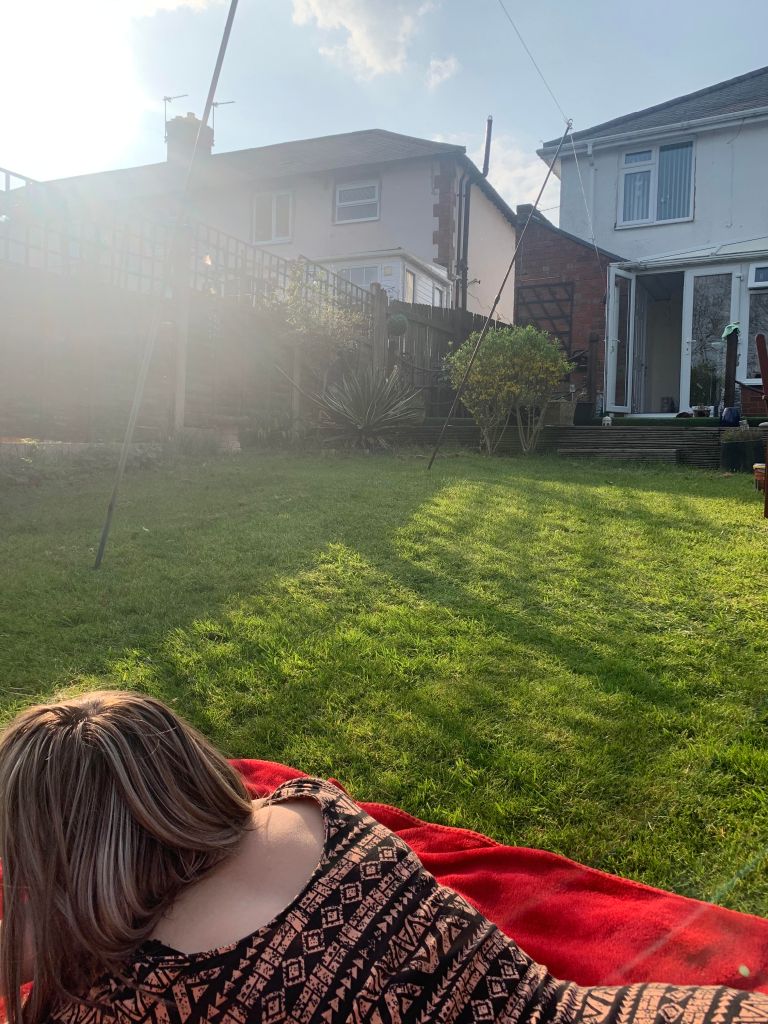
Coming to the end of this assignment I think I’ve stuck to the brief well, as I have linked my images through a particular event/period of time and tried to add a creative twist. I also think i researched into the topic well and in depth to prepare me further for the shooting process.
 OCA Photography Expressing your Vision